Top 10 Greatest Rugby World Cup Tries Ever Scored

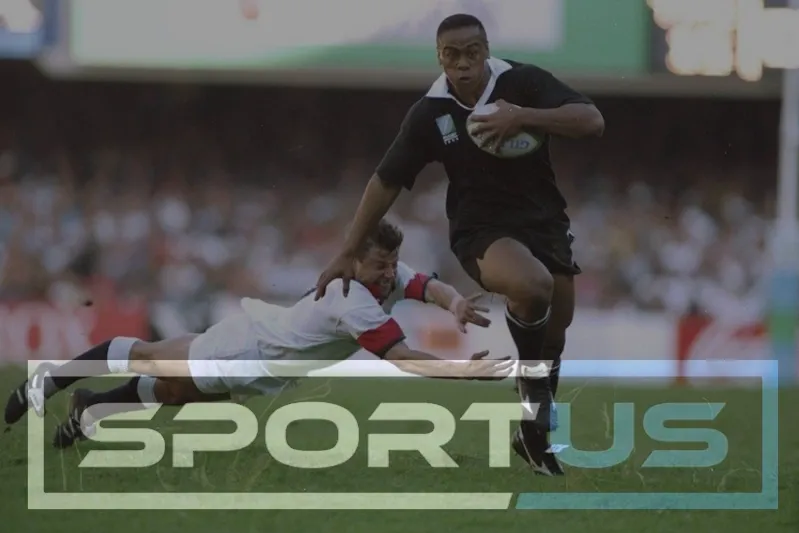
The Rugby World Cup has produced thousands of tries, but only a small number have become permanent parts of rugby history. Some are remembered because of extraordinary speed or individual skill. Others became famous because they arrived in semi-finals, finals or matches that changed the direction of an entire tournament. From John Kirwan running through Italy in the first Rugby World Cup to Jonah Lomu destroying the England defence and Karne Hesketh completing one of the greatest sporting upsets ever seen, these tries represent rugby at its most exciting. Ranking them is naturally subjective, but quality, difficulty, match importance and historical impact all help separate a memorable score from a truly legendary one.
Moments That Defined the Biggest Stage in Rugby
A beautiful try during the pool stage can become famous because of the skill involved, but the pressure of knockout rugby adds another level. Several tries on this list arrived when a place in the final was at stake. Others transformed the reputation of a player, a team or even an entire rugby nation.
The best Rugby World Cup tries also demonstrate the enormous variety of the sport. There are long solo runs, powerful carries, perfectly timed passes, kicks into space and patient team attacks. No single style produces greatness.
10. Makazole Mapimpi vs England, 2019 Final
South Africa had already won two Rugby World Cups before arriving in the 2019 final, but the Springboks had never scored a try in a World Cup final. Makazole Mapimpi changed that against England in Yokohama.
South Africa controlled much of the contest through physical pressure, strong set pieces and the kicking of Handre Pollard. With the Springboks leading in the second half, Mapimpi helped create the moment that finally opened the England defence.
Mapimpi kicked the ball forward, Lukhanyo Am gathered it and then returned possession to the winger with a perfectly timed pass. Mapimpi finished the move and became the first South African player to score a try in a Rugby World Cup final.
The score was important for more than statistics. It effectively pushed England toward a position from which recovery became extremely difficult. Cheslin Kolbe later added another try as South Africa completed a 32-12 victory and lifted the Webb Ellis Cup.
9. Jason Robinson vs Australia, 2003 Final
England are most closely associated with the famous Jonny Wilkinson drop goal that decided the 2003 Rugby World Cup final, but Jason Robinson produced the only England try of the match.
Australia had scored early through Lote Tuqiri, and the final quickly developed into a tense contest. England gradually created pressure and moved the ball across the field shortly before half-time.
Robinson received possession with limited space near the left side. His acceleration allowed him to reach the corner before the Australian defence could close him down. The try gave England an important advantage and demonstrated exactly why Robinson was so dangerous in open space.
The match eventually required extra time, with Wilkinson deciding it 20-17. That final kick became the defining image, but the Robinson try remains one of the most important scores in England rugby history.
8. David Campese vs New Zealand, 1991 Semi-Final
David Campese produced one of the finest individual Rugby World Cup performances when Australia faced defending champions New Zealand in the 1991 semi-final.
The All Blacks had never lost a Rugby World Cup match at that point. Campese immediately created problems with his movement, pace and ability to change direction. His try came from an attacking move in which he curved across the defence before accelerating toward the corner.
It was classic Campese. Defenders struggled to determine whether he would continue moving sideways, cut back inside or suddenly attack the available space. By the time New Zealand reacted, the Australian winger had already created the separation he needed.
Campese later produced another extraordinary moment when he collected a Michael Lynagh kick and created a try for Tim Horan with a famous no-look pass. Australia won 16-6 before defeating England in the final. The semi-final established Campese as one of the defining players of the tournament.
7. Takudzwa Ngwenya vs South Africa, 2007 Pool Stage
The United States were not expected to seriously trouble eventual champions South Africa during the 2007 Rugby World Cup. One moment, however, produced a try that remains famous throughout the rugby world.
Takudzwa Ngwenya received the ball with Bryan Habana positioned between him and the try line. That was normally a terrible situation for an attacking winger. Habana was one of the fastest players in international rugby and would finish the tournament with eight tries.
Ngwenya attacked him directly, moved toward the outside and then accelerated. Habana could not match the change of pace. Ngwenya raced clear and completed an extraordinary try for the United States.
South Africa comfortably won the match, but the Ngwenya score became one of the images of the tournament. World Rugby later recognised it as the 2007 Try of the Year. Beating an ordinary defender on the outside is impressive. Doing it to Bryan Habana on the World Cup stage made the moment unforgettable.
6. Julian Savea vs France, 2015 Quarter-Final
Julian Savea frequently attracted comparisons with Jonah Lomu because of the combination of size, power and speed he brought to the New Zealand wing. Against France in the 2015 quarter-final, those comparisons became impossible to ignore.
Savea received the ball on the left and still had several defenders between himself and the line. Instead of searching for space around them, he effectively went through them.
Three French defenders attempted to stop the powerful winger. Savea broke through the contact and continued toward the try line, producing a score that immediately reminded supporters of the destructive running associated with Lomu.
New Zealand dominated the quarter-final 62-13 and continued toward a second consecutive World Cup title. The second Savea try from that match was later selected as the World Rugby Try of the Year for 2015.
It was not the most delicate score in World Cup history, but it was one of the greatest demonstrations of individual power ever seen at the tournament.
5. Christophe Dominici vs New Zealand, 1999 Semi-Final
France appeared to be heading out of the 1999 Rugby World Cup when New Zealand established a 24-10 lead early in the second half of the semi-final at Twickenham.
Jonah Lomu had scored twice, and another All Blacks appearance in the final seemed likely. France then produced one of the greatest comebacks in Rugby World Cup history.
After Christophe Lamaison reduced the deficit through drop goals and penalties, a kick behind the New Zealand defence created another opportunity. The ball bounced awkwardly, but Christophe Dominici judged it perfectly. He collected possession and accelerated toward the line to put France ahead.
The try changed the entire atmosphere of the match. New Zealand suddenly looked vulnerable, while France played with increasing confidence. Further French tries followed as the comeback became an extraordinary 43-31 victory.
Dominici did not simply score a beautiful try. He produced the moment when one of the greatest World Cup shocks moved from possibility to reality.
4. Karne Hesketh vs South Africa, 2015 Pool Stage
Some tries become legendary because of individual brilliance. The Karne Hesketh try against South Africa became legendary because of what it meant.
Japan entered the 2015 Rugby World Cup with little history of success at the tournament. South Africa were two-time world champions and one of the strongest rugby nations on the planet.
Japan refused to disappear throughout an extraordinary match in Brighton. With South Africa leading 32-29 late in the contest, Japan had opportunities to take a penalty and potentially secure a draw. Instead, captain Michael Leitch backed the attack.
The Brave Blossoms continued searching for the winning try. After sustained pressure and several phases near the South African line, the ball eventually moved toward the left side. Hesketh received it and crossed in the corner after time had already gone beyond 80 minutes.
Japan won 34-32. The celebration that followed became one of the defining images of Rugby World Cup history.
The try itself was not a 70-metre solo run, but rugby is about context as much as technical beauty. Hesketh completed one of the greatest upsets international sport has ever produced.
3. Serge Blanco vs Australia, 1987 Semi-Final
The first Rugby World Cup produced an extraordinary semi-final between France and Australia in Sydney. With the scores close and time running out, France launched one final attack.
The movement became a perfect example of French attacking rugby. The ball travelled through several pairs of hands as France attempted to stretch the Australian defence across the field.
Eventually the attack reached Serge Blanco. The great full-back found enough space near the left side to finish the move and score the decisive try.
France won 30-24 and advanced to the inaugural Rugby World Cup final. World Rugby later described the Blanco score as the most important try of his international career.
The context elevates it among the greatest tries ever scored at the competition. France had to keep the ball alive under enormous pressure, move it across the field and trust the attacking instincts that had defined the team. Blanco then completed the move when a mistake would probably have ended the French challenge.
2. John Kirwan vs Italy, 1987 Pool Stage
The Rugby World Cup needed a moment that could demonstrate what the new tournament might become. John Kirwan provided it in the opening match of the first competition.
New Zealand faced Italy at Eden Park in 1987. From deep inside New Zealand territory, Kirwan received the ball and began an extraordinary run.
He accelerated through the Italian defence, changing direction repeatedly while defenders attempted to stop him. The run covered roughly 70 metres and involved Kirwan beating a succession of opponents before reaching the try line.
New Zealand eventually won 70-6, so the score did not decide a close match. Its importance came from something larger. It provided the first Rugby World Cup with an immediate highlight that supporters could remember.
Decades later, World Rugby continued to identify the Kirwan run as one of the great tries in tournament history. It combined pace, balance, strength and confidence, and it arrived at exactly the right moment for a competition trying to establish itself on the global sporting calendar.
1. Jonah Lomu vs England, 1995 Semi-Final
Jonah Lomu produced many extraordinary moments during the Rugby World Cup, but his first try against England in the 1995 semi-final became the defining image of his career.
The New Zealand winger was only 20 years old and had arrived at the tournament with limited international experience. By the semi-final, the rugby world already understood that something unusual was happening.
Lomu received possession and immediately attacked the England defence. Tony Underwood attempted to stop him, followed by Will Carling. Lomu continued forward. Full-back Mike Catt then positioned himself for the final tackle.
What followed became one of the most famous moments in rugby. Lomu powered directly through the challenge, leaving Catt on the ground before completing the try.
It was not his only contribution. Lomu scored four tries as New Zealand defeated England 45-29 and reached the final.
The combination of speed and physical strength had rarely been seen in a winger of his size. Lomu could run around defenders, but the England try demonstrated that he could also simply run through them.
The score changed perceptions of what a rugby winger could be. Lomu became the first truly global superstar of the professional era, and images of that run remain closely connected with Rugby World Cup history more than three decades later.
Why Some Tries Become Bigger Than the Match
The greatest World Cup tries are remembered for different reasons. Ngwenya produced pure speed against one of the fastest opponents in the game. Savea demonstrated extraordinary power. Kirwan created a long solo run before the tournament had established its global reputation. Blanco finished a dramatic team attack in a semi-final.
Context can make an apparently simple finish much more important. Hesketh did not need to beat half of the South African team by himself. The greatness came from Japan refusing an easier route to a draw, continuing to attack and eventually winning a match that almost nobody expected the team to win.
The same principle applies to Mapimpi. His try was technically excellent, but becoming the first Springbok to cross the line in a World Cup final gave the moment additional historical importance.
Individual Brilliance and Team Rugby
Rugby tries can be created in completely different ways. Lomu and Kirwan produced famous examples of individual power and running ability, but several other entries required excellent work from multiple players.
Robinson needed England to create space against Australia. Blanco completed a French attack that kept the ball alive under extreme pressure. Mapimpi and Am combined beautifully to break England in the 2019 final. Dominici had to read a difficult bouncing ball after France used a kick to expose space behind New Zealand.
This variety is one reason Rugby World Cup highlights remain so compelling. Two tries can both be brilliant while having almost nothing in common technically.
The Tries That Rugby Supporters Never Forget
Every Rugby World Cup produces spectacular scores, and future tournaments will inevitably create new candidates for a list like this. What makes the established classics difficult to replace is the combination of skill and history surrounding them.
Hesketh gave Japan the Miracle of Brighton. Blanco sent France into the first World Cup final. Campese helped end the unbeaten World Cup record of New Zealand in 1991. Mapimpi created a new piece of Springbok history in 2019.
At the very top, Kirwan and Lomu produced tries that became bigger than the matches in which they were scored. The Kirwan run helped introduce the possibilities of the Rugby World Cup to a global audience. Eight years later, the destructive Lomu try against England showed the world a type of player that rugby had never experienced before.
Great tries can come from speed, strength, creativity or teamwork. The greatest Rugby World Cup tries combine those qualities with a moment that matters. That is why supporters can watch them decades later and still understand immediately why they became part of rugby history.