Top 10 Biggest VAR Controversies in Football History

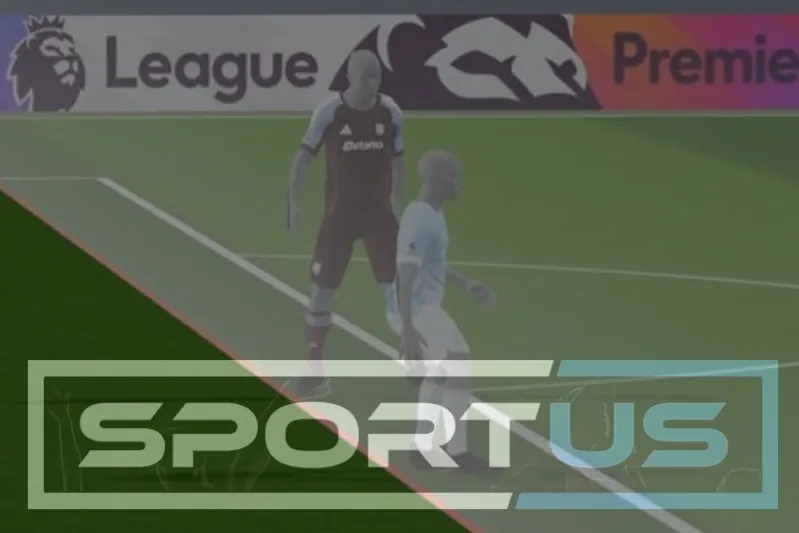
VAR was introduced to football with a simple objective: help referees correct major mistakes. Instead, video technology has created some of the most debated moments of the modern game. Offside lines, handball decisions, penalties, red cards and communication failures have all produced controversy, even when officials have access to several camera angles. Some incidents changed individual matches, while others affected title races, Champions League ties and World Cup qualification. From admitted human errors to decisions that remain disputed years later, these are 10 of the biggest VAR controversies football has seen.
Decisions That Changed the VAR Debate
Not every controversial VAR decision is necessarily incorrect. In several cases, officials followed the laws exactly, but supporters still questioned whether the law itself produced a fair result. Other incidents were much clearer, with refereeing organizations later admitting that mistakes had been made.
The importance of the match also matters. A disputed call during an ordinary league game can be frustrating, but a decision in a World Cup or Champions League knockout match can change football history.
10. England vs Denmark, Euro 2020 Semi-Final
England and Denmark were level at 1-1 when Raheem Sterling entered the penalty area during extra time at Wembley. Sterling moved between Joakim Maehle and Mathias Jensen before going to ground.
Referee Danny Makkelie awarded England a penalty. VAR checked the incident but decided there was not enough evidence to overturn the original decision.
Replays created immediate debate because the contact appeared limited. Some observers believed Sterling had been touched sufficiently to justify the decision, while others argued that the challenge did not deserve a penalty in such an important match.
Harry Kane saw his penalty saved by Kasper Schmeichel but scored from the rebound. England won 2-1 and reached the European Championship final for the first time.
The controversy was less about VAR missing an obvious event and more about the high threshold required to overturn a subjective decision. Once the referee had awarded the penalty, VAR needed to determine that the call represented a clear error. That standard allowed the original decision to remain.
9. Chelsea vs Tottenham, 2022 Premier League
The London derby between Chelsea and Tottenham in August 2022 produced one of the most discussed examples of VAR failing to intervene in an off-the-ball incident.
During the closing stages, Tottenham defender Cristian Romero appeared to pull Marc Cucurella by the hair while the Chelsea defender was waiting inside the penalty area.
Referee Anthony Taylor did not punish Romero, and VAR official Mike Dean decided not to recommend an on-field review. Tottenham then scored from the corner sequence that followed, with Harry Kane making the score 2-2.
The incident became even more controversial when Dean later acknowledged that he should have recommended a review.
For Chelsea supporters, the sequence was particularly frustrating because the missed incident occurred immediately before the equalizing goal. The case became another example of the difficulties VAR faced when trying to decide how aggressively it should intervene in subjective situations.
8. Everton vs Manchester City, 2022 Premier League
Manchester City were protecting a 1-0 lead at Everton when the ball bounced toward Rodri inside the City penalty area. The midfielder appeared to make contact with the ball using his arm.
Everton players immediately demanded a penalty. Referee Paul Tierney allowed play to continue, and VAR reviewed the incident without recommending a penalty.
The decision caused enormous frustration. Everton were fighting against relegation, while Manchester City were involved in an extremely close Premier League title race with Liverpool.
The refereeing organization later apologized to Everton over the decision. City eventually won the Premier League by only one point.
It would be impossible to know how the entire season would have developed if Everton had received and scored a penalty, but the wider context made the incident much bigger than a normal handball debate. It became one of the most frequently mentioned VAR controversies of that title race.
7. France vs Croatia, 2018 World Cup Final
The 2018 World Cup was the first edition of the tournament to use VAR, and the technology became part of the biggest match of all.
France and Croatia were level when a corner reached Ivan Perisic inside the penalty area. The ball struck the Croatian winger on the hand after Blaise Matuidi failed to make clean contact in front of him.
Referee Nestor Pitana initially allowed play to continue. He was then advised to review the incident on the pitchside monitor.
After watching the replay several times, Pitana awarded France a penalty for handball. Antoine Griezmann converted it to give France a 2-1 lead.
The decision divided players, coaches and former referees. Some believed the position and movement of the arm justified the penalty. Others argued that the distance was too short and that Perisic had little opportunity to react.
France eventually won 4-2, so the penalty was not the final goal of the match, but it arrived at a crucial moment. The fact that VAR played such an important role in a World Cup final ensured the incident would become part of the early debate surrounding video refereeing.
6. Paris Saint-Germain vs Manchester United, 2019 Champions League
Manchester United arrived in Paris facing an extremely difficult task after losing the first leg of the Champions League round of 16 tie against Paris Saint-Germain 2-0 at home.
United produced an unexpected comeback and led 2-1 late in the second leg, but still needed another goal to advance.
In stoppage time, Diogo Dalot attempted a long-range shot that struck Presnel Kimpembe. The referee initially awarded a corner, but VAR advised him to review the incident for a possible handball.
After using the pitchside monitor, the referee awarded Manchester United a penalty. Marcus Rashford converted it, giving United a 3-1 victory and sending the English club through on away goals.
The decision caused a huge argument over what defenders were expected to do with their arms. Kimpembe had turned his body while attempting to block the shot, and opinions differed over whether his arm created an unnatural barrier.
The dramatic circumstances made the controversy even larger. A VAR intervention in stoppage time had completely changed the outcome of a Champions League knockout tie.
5. France vs Tunisia, 2022 World Cup
France thought Antoine Griezmann had scored a late equalizer against Tunisia during the group stage of the 2022 World Cup. The goal appeared to make the final score 1-1.
However, VAR reviewed the play for offside. Griezmann had originally been in an offside position when the ball was played forward, but a Tunisian defender later attempted to clear the ball before it reached him.
The referee eventually returned to the pitchside monitor and disallowed the goal. Tunisia won 1-0.
The unusual part came from the timing. The referee had appeared to restart the match after the goal before later ending the game and conducting the review. France formally protested the result because of questions over whether the review could still take place after play had restarted.
FIFA rejected the protest, so the 1-0 result remained.
France had already secured qualification and Tunisia still failed to advance from the group, meaning the decision did not change which teams reached the knockout stage. Even so, the procedural questions turned a normal offside review into one of the stranger VAR controversies in World Cup history.
4. Japan vs Spain, 2022 World Cup
Japan produced one of the great results of the 2022 World Cup by defeating Spain 2-1, but the winning goal immediately became the subject of global debate.
Kaoru Mitoma chased a ball toward the goal line and managed to send it back into the penalty area. Ao Tanaka then scored from close range.
From several television angles, the ball appeared to have crossed the line before Mitoma played it. VAR conducted a review and concluded that a small part of the ball remained above the line.
Under football laws, the entire ball must cross the entire line before it is considered out of play. Because part of the ball remained over the line when viewed from the correct angle, the goal was allowed.
The decision had major consequences. Japan won the group, Spain also qualified, and Germany were eliminated despite beating Costa Rica.
The incident demonstrated how camera perspective can create completely different impressions. A side angle made the ball appear out, while the overhead information used during the review showed that it had remained marginally in play.
The decision may have been technically correct, but the tiny margin and enormous World Cup consequences made it one of the most discussed VAR moments ever.
3. Arsenal vs Brentford, 2023 Premier League
Arsenal were leading Brentford 1-0 during a Premier League title challenge when Ivan Toney scored an equalizer in the second half.
The build-up included a possible offside involving Christian Norgaard. VAR spent time checking an earlier phase of the attack but failed to properly apply the offside lines to the decisive moment involving Norgaard.
The goal was allowed and the match finished 1-1.
The controversy became much larger when it emerged that VAR official Lee Mason had failed to complete the necessary offside check correctly. The refereeing organization acknowledged that a significant error had occurred.
Arsenal were competing with Manchester City for the Premier League title, so every dropped point carried enormous importance. City eventually finished five points ahead of Arsenal.
Again, one decision cannot explain an entire league season. Arsenal had many opportunities to collect points elsewhere. However, the incident damaged confidence in VAR because the problem was not a difficult interpretation of the laws. The required technical process had simply not been completed correctly.
2. Newcastle United vs Arsenal, 2023 Premier League
Anthony Gordon scored the only goal when Newcastle defeated Arsenal 1-0 at St James Park in November 2023. The goal produced an unusually complicated VAR review involving several different questions.
Officials examined whether the ball had crossed the goal line before Joe Willock kept it in play. They then considered a possible foul by Joelinton on Gabriel Magalhaes and finally looked at whether Gordon had been offside.
After a review lasting several minutes, the goal was allowed to stand.
Arsenal manager Mikel Arteta strongly criticized the decision after the match, and Arsenal later released a public statement supporting the manager and criticizing refereeing standards.
The controversy demonstrated one of the biggest problems with VAR. Multiple camera angles do not always provide a clear answer. The ball position, physical contact and offside phase all created uncertainty, and officials decided they did not have enough evidence to overturn the on-field decision.
The goal became a major talking point because VAR had examined the same scoring sequence from several different perspectives and still produced a result that one side considered unacceptable.
1. Tottenham vs Liverpool, 2023 Premier League
The Luis Diaz incident against Tottenham stands above most VAR controversies because officials later confirmed that the goal should have counted.
Liverpool had already been reduced to 10 players when Mohamed Salah released Diaz behind the Tottenham defense. Diaz finished the move, but the assistant referee raised the flag for offside.
VAR checked the play and correctly recognized that Diaz was onside. The problem came from communication.
The VAR team mistakenly believed the original decision on the field had been to award the goal. They therefore communicated that the check was complete, believing they were confirming a correct onside decision.
In reality, the referee interpreted the message as confirmation that the offside decision should stand. Tottenham restarted the match before the officials realized what had happened.
Once play had restarted, the VAR team did not stop the match to correct the error. Diaz therefore lost a completely valid goal.
Liverpool eventually lost 2-1 after playing with nine men and conceding an own goal in stoppage time.
The refereeing organization admitted that a significant human error had occurred and later released the audio of the communication between the officials. The recording showed the moment when the VAR team realized that the match had restarted with the wrong decision.
Unlike many VAR controversies, this was not about whether a handball was deliberate, whether contact deserved a penalty or whether an offside margin was too small. The technology had identified the correct answer. The officials had the correct information. A communication failure still produced the wrong decision.
That combination made the Diaz incident one of the clearest examples of VAR failing despite having everything necessary to reach the correct outcome.
Why VAR Can Still Produce Major Errors
VAR technology can provide slow-motion footage, multiple camera angles and precise offside information, but humans still have to interpret much of that evidence.
The most controversial incidents generally come from several areas:
- Communication failures between the referee and VAR team
- Subjective decisions involving handball or physical contact
- Incorrectly selected camera angles
- Failure to complete the correct review process
- Uncertainty over when VAR should intervene
- Extremely small offside margins
The Luis Diaz incident showed that even a technically correct VAR review can fail if communication is poor. The Arsenal and Brentford case demonstrated that human error can also affect the technical offside process.
Correct Decisions Can Still Be Controversial
One of the biggest misunderstandings surrounding VAR is that controversy automatically means a decision was wrong.
The Japan goal against Spain provides a good example. Many supporters believed the ball had gone out because of the television angle they initially saw. The law requires the entire ball to cross the entire line, and another perspective showed why officials allowed play to continue.
Subjective incidents create an even larger problem. Two experienced referees can watch the same handball or tackle and reach different conclusions. VAR cannot completely remove that element because football laws still require interpretation.
This is why penalty decisions such as England against Denmark or France against Croatia can remain controversial long after the match. Video can show exactly what happened, but it cannot automatically decide how much contact is enough for a foul.
VAR Has Changed How Supporters Watch Football
Before VAR, a goal normally produced an immediate celebration. Modern supporters often wait after close goals because they know an offside, handball or foul may be discovered during the review.
The technology has corrected many decisions that would otherwise have been wrong, but the biggest mistakes receive far more attention. A VAR intervention in a World Cup, Champions League knockout game or Premier League title race can dominate discussion for days.
There is also a different level of expectation. Supporters generally accepted that referees could miss incidents in real time. When several officials have access to slow-motion replays and still reach a disputed conclusion, frustration becomes much greater.
The Luis Diaz Error Remains the Ultimate VAR Warning
Football will probably never completely eliminate refereeing controversy. The game moves too quickly, and many laws depend on interpretation rather than simple measurements.
VAR can improve accuracy, especially with clear offsides and incidents that the referee could not see. However, the biggest controversies demonstrate that technology is only as effective as the process surrounding it.
The Luis Diaz decision remains particularly important because the system found the correct answer and still failed to deliver it. Everton against Manchester City and Arsenal against Brentford demonstrated different types of human error, while major tournament incidents involving France, Japan, Croatia and England showed how VAR can influence the biggest matches in football.
Future improvements may make reviews quicker and communication clearer, but debate will remain part of the game. As long as officials must interpret contact, handball and complicated match situations, VAR will continue solving some arguments while creating entirely new ones.